Restaurant Online Ordering Apps for Revenue Growth 2026
It’s Saturday night. Your restaurant is packed. The phone’s ringing every thirty seconds with takeout orders while a line forms at the door. Your best server is stuck taking phone orders instead of serving tables, two orders got mixed up, and you just paid commission fees for last week’s delivery orders alone.
There’s a better way, and your competitors are already using it. Restaurant online ordering apps aren’t just a trend anymore. They’re the backbone of how people interact with restaurants today.
The restaurants thriving right now aren’t necessarily serving better food. They’re making it ridiculously easy for customers to order while keeping every dollar of profit instead of handing 30% to third-party platforms.
Whether you’re running a quick-service restaurant, a cosy neighbourhood cafe, or managing multiple locations, the way customers order food has fundamentally changed. And if you’re still relying on phone calls and scribbled notes, you’re losing money.
Here’s what you need to know about restaurant online ordering systems and why they might be the smartest investment you make this year.
What Are Restaurant Online Ordering Apps?
Think of a restaurant online ordering system as your digital front door. They’re software platforms that let customers browse your menu, customise orders, pay, and schedule pickup or delivery, all from their phones or computers.
But here’s the thing: not all ordering apps are created equal. Some are third-party platforms like DoorDash or Uber Eats that charge hefty commission fees (we’re talking 15-30% per order). Others are branded apps that you own, giving you complete control over the customer experience and, more importantly, your customer data.
The difference? One builds someone else’s business. The other builds yours.
How Do Restaurant Online Ordering Apps Actually Work?
The mechanics are simpler than you might think.
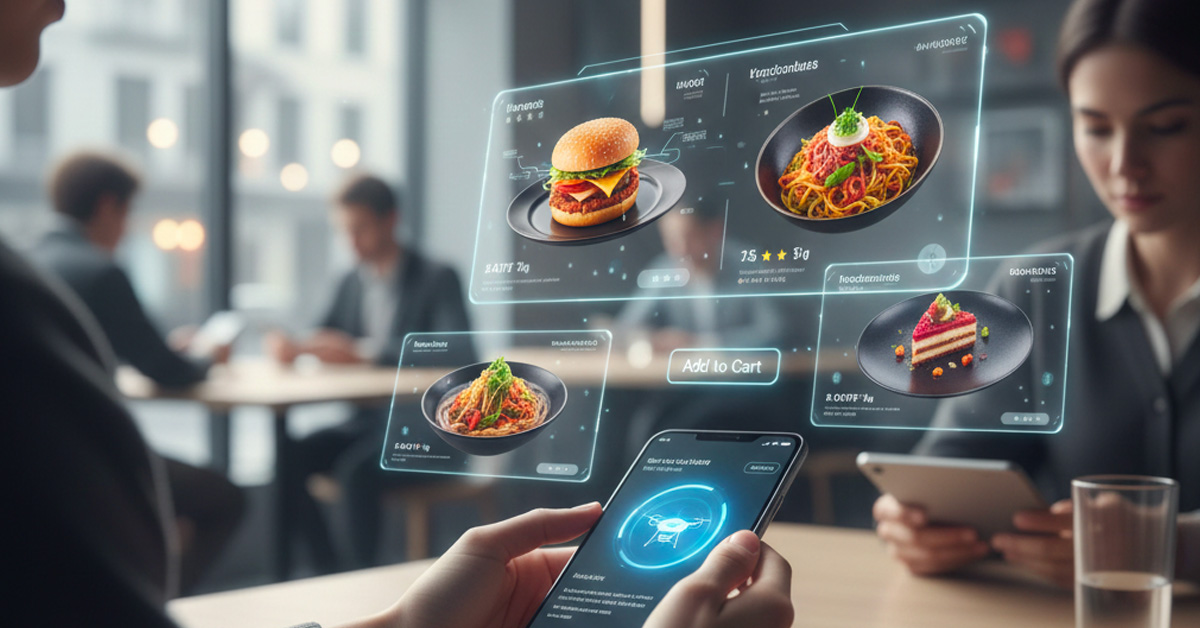
A customer opens your app or ordering website, browses your digital menu, adds items to their cart, and checks out. The order instantly pops up in your kitchen display system (or POS system if they’re integrated). Your team prepares it, and the customer picks it up or gets it delivered.
Behind the scenes, the magic happens:
- Real-time inventory sync prevents orders for items you’re out of
- Automated notifications update customers about order status
- Customer profiles remember preferences and favourite orders
The entire process takes seconds. No miscommunication. No “Can you repeat that?” Instead, restaurants with online ordering systems see an average 20-30% increase in order volume compared to phone-only operations.
Key Features of Online Food Ordering Systems That Make Restaurant Operations Smoother
Not every feature matters, but these actually move the needle:
- Menu Management: Update prices, add items, mark things as sold out, all in real-time. No more “Sorry, we’re out of that” after someone drives to pick up their order.
- Order Customisation: Let customers build their perfect meal. Extra cheese? No onions? Gluten-free? Your app handles the special instructions without the back-and-forth.
- Order Tracking: Customers can see exactly where their food is. It’s like the pizza tracker, but for your entire menu. Fewer “Where’s my food?” calls, more happy customers.
- POS Integration: This is the big one. When your ordering app talks to your POS system, orders flow directly to the kitchen. No double-entry. No missed orders. Just seamless integration.
- Analytics Dashboard: See what’s selling, when peak hours hit, and what customers are craving. Data-driven decisions beat guesses every single time.
Traditional Phone Orders vs. Online Ordering Systems: What’s the Real Difference?
Order Accuracy
Traditional phone orders are prone to miscommunication and errors, while online ordering systems deliver 99%+ accuracy with clear selections that eliminate confusion.
Labor Cost
Phone orders require dedicated staff to take calls during busy hours, but online ordering systems automate the process and free up staff for food prep and customer service.
Peak Hour Handling
Traditional phone systems get overwhelmed during rush periods, leading to lost sales, whereas online ordering platforms handle unlimited simultaneous orders without breaking a sweat.
Customer Data
With phone orders, customer information is lost after the transaction, but online ordering apps capture, analyze, and store data for targeted marketing campaigns.
Order Speed
A typical phone order takes 3-5 minutes per call with back-and-forth clarifications, while online ordering systems process orders in just 60-90 seconds.
Operating Hours
Phone orders are limited to staff availability and business hours, but online ordering systems work 24/7, letting customers place orders anytime.
Marketing Reach
Traditional phone orders depend entirely on word-of-mouth, while online ordering platforms enable push notifications, email campaigns, and SMS marketing to bring customers back.
The numbers don’t lie. Traditional phone orders create bottlenecks. Online ordering platforms eliminate them. Over 85% of Gen Z and 82% of millennials prefer contactless, mobile ordering options, while 99% of restaurants in the U.S. now offer at least one online ordering platform.
And here’s something most restaurant owners miss: when someone calls in an order, you get zero information about them. With an online ordering app, you’re building a customer database that lets you send targeted promotions, birthday offers, and “we miss you” discounts to people who haven’t ordered in a while.
That’s not just efficiency. That’s building customer loyalty that lasts.
Should You Use a Third-Party Platform or Build Your Own Restaurant App?
This is the million-dollar question. Literally.
Third-party platforms offer instant access to millions of hungry customers. Sounds great, right? Until you see the bill. Let’s break it down:
- Commission Fees: Third-party platforms charge 15-30% per order, while your own app and website cost $0 in commissions, just standard processing fees around 3%.
- Customer Data: With third-party platforms, all customer data belongs to them, but with your own system, 100% of that valuable information is yours to use for marketing and loyalty programs.
- Brand Control: Third-party apps list you among dozens of competitors, whereas your own branded app creates a full branded experience that reinforces your restaurant’s identity.
- Marketing: Third-party platforms limit your marketing to their ecosystem, but owning your ordering system gives you first-party data for direct marketing campaigns that you control.
- Long-term Cost: Commission fees bleed profits indefinitely with third-party platforms, while your own system requires a one-time setup with much lower ongoing costs.
- Customer Relationship: On third-party platforms, you’re just another restaurant in a crowded marketplace, but your own app creates a direct connection with guests that builds loyalty.
- Profit Margin: Third-party commissions significantly reduce your profit margins, while your own commission-free ordering system maximises every dollar you earn.
- Customization: Third-party platforms give you zero customisation; you play by their rules, but your own system offers complete control over features, design, and user experience.
Here’s the math that matters: if you’re doing $10,000 in monthly delivery sales through third-party apps at 25% commission, you’re paying $2,500 a month. That’s $30,000 a year in fees.
With your own commission-free ordering system, that money stays in your pocket.
The smart play? Use third-party platforms for discovery, new customers who don’t know you yet. But invest in your own direct ordering solution to build long-term, profitable customer relationships.
What Are the Top Advantages of Restaurant Online Ordering Systems?
Let’s get specific about why restaurant online ordering apps are game-changers:
- Increase Revenue Without Adding Tables: Your dining room has physical limits. Your app doesn’t. Serve more customers without expanding your space or hiring more servers.
- Boost Average Order Value: Smart upselling prompts (“Add fries for $2?”) and combo suggestions increase ticket sizes. Customers spending more don’t feel pressured; they feel taken care of.
- Reduce Labour Costs: No more dedicating staff to answer phones during rush hours. Your team can focus on what they do best: making great food and providing excellent in-person service.
- Capture Customer Data: Every order builds your CRM. Email addresses, order preferences, and frequency, this is marketing gold that third-party apps keep from you.
- 24/7 Ordering Capability: Customers can place orders for tomorrow’s lunch at midnight. Your business is always open for customers, even when your doors are closed.
- Improve Order Accuracy: Written orders with clear specifications mean fewer mistakes, less food waste, and happier customers. It’s better for everyone.
- Streamline Kitchen Operations: Orders flow directly to your kitchen display system. No more tickets falling behind the printer or orders getting lost in translation.
- Gather Actionable Insights: See which menu items are winners, what times are busiest, and which marketing campaigns drive orders. Make decisions based on data, not hunches.
Future Trends in Online Ordering Apps
- AI-Powered Personalisation: Imagine your app suggesting exactly what a customer wants based on their order history, the weather, and the time of day. That’s not science fiction. It’s happening now with artificial intelligence and machine learning.
- Voice Ordering: “Hey Siri, order my usual from Mario’s Pizzeria.” Voice assistants are making ordering even more frictionless. The restaurants that integrate first win.
- Contactless Everything: Post-pandemic, contactless payment and curbside pickup aren’t just nice-to-haves. They’re expected. And they’re here to stay.
- Subscription Dining Models: Some restaurants are testing unlimited pasta nights or monthly sandwich subscriptions. Think Netflix, but for food. It’s about predictable revenue and locked-in loyalty.
- Integration with Ghost Kitchens: Virtual restaurants and cloud kitchens are exploding. They exist only through ordering apps: no dining room, no storefront. Just pure, efficient food production.
- Blockchain for Transparency: Know exactly where your ingredients came from? Blockchain technology is starting to track food supply chains in real-time, building trust with increasingly conscious consumers.
The winners in the next five years won’t just have ordering apps. They’ll have smart, predictive, deeply integrated systems that anticipate customer needs before they even realise them.
Important Factors to Consider Before Choosing Your Restaurant Online Ordering App
Don’t just pick the first solution you find. Ask these questions:
Does it integrate with your existing POS?
If your ordering app and POS system don’t talk to each other, you’re creating more work, not less. Seamless integration is non-negotiable.
What’s the total cost of ownership?
Look beyond setup fees. Consider monthly subscriptions, transaction fees, and hidden costs. Calculate what you will actually pay annually.
Can you customise it to match your brand?
Your app should feel like your restaurant. Colours, fonts, photos, everything should scream “this is us.” Generic templates hurt more than help.
What kind of support do they offer?
When something breaks at 7 PM on a Saturday (it will), can you get help? Or are you left hanging?
Is it mobile-responsive?
Most orders happen on phones. If your ordering website looks terrible on mobile, you’re leaving money on the table.
Does it handle multiple locations?
If you’re planning to expand, make sure your system can grow with you. Switching platforms later is painful.
What data do you actually own?
Read the fine print. Some platforms claim ownership of customer data. That’s your most valuable asset, don’t give it away.
How’s the customer experience?
Order from your own system. Is it intuitive? Fast? Frustrating? If you hate using it, your customers will too.
Conclusion
Finally, restaurant online ordering apps aren’t about keeping up with trends. They’re about survival and growth in an industry where margins are thin, and competition is fierce.
The restaurants thriving right now aren’t necessarily the ones with the best food (though that helps). They’re the ones that make it ridiculously easy for customers to order, pay, and come back again.
You can keep paying 30% commission fees to third-party platforms and hope they’ll send customers your way. Or you can invest in your own direct ordering system, own the customer relationship, and build something that actually compounds in value over time.
The choice is yours. But the data is clear: restaurants that control their online ordering experience make more money, waste less time, and build stronger customer connections.
Ready to take control of your online ordering? CherryBerry RMS offers a complete restaurant management system with integrated online ordering, POS, and kitchen management software, all designed to help you increase sales. No commission fees. Just you, your food, and your customers.
Because your restaurant deserves better than giving away 30% of every order.
People Also Asked
What is online ordering for restaurants?
Online ordering for restaurants is a digital system that lets customers browse your menu, customise orders, and pay through a website or mobile app. These online ordering apps for restaurants work 24/7 and send orders directly to your kitchen display system or POS system, eliminating phone calls and manual order entry.
Why do modern restaurants need online ordering systems?
Over 85% of Gen Z and 82% of millennials prefer contactless, mobile ordering options, and restaurants with online ordering platforms see an average 20-30% increase in order volume. Without one, you’re losing sales to competitors who make ordering easier and missing out on the customer data that drives repeat business.
How does online ordering help a restaurant to grow?
Online ordering increases revenue by removing the physical limits of your dining room, reduces labour costs by eliminating phone order staff, and builds a customer database for targeted marketing campaigns. The analytics dashboard shows exactly what’s selling and when, helping you make data-driven decisions that boost profits over time.
Why are fast food restaurants switching to their own app?
Third-party platforms charge 15-30% commission per order, which costs thousands annually for most restaurants. With their own commission-free ordering system, restaurants pay only 2-3% payment processing fees and own 100% of customer data for direct marketing.
How much does it cost to develop a restaurant’s online ordering app?
The cost varies widely depending on your business needs, restaurant size, and feature requirements. Factors like POS system integration, customisation level, number of locations, and whether you need a mobile app or just an online ordering website all impact pricing. The key is comparing any investment against the commission fees you’re currently paying to third-party platforms; those add up fast.
Do online ordering apps integrate with other systems and tools?
Yes, modern restaurant online ordering systems integrate directly with your POS system, kitchen display system, and order management systems, so orders flow automatically to kitchen screens. The best platforms also sync with inventory management, customer relationship management tools, analytics dashboards, and loyalty programs for seamless integration.
