Cloud-Based POS System Lahore: The Complete Guide for Restaurant Owners in 2026
Why Lahore’s Restaurant Industry Can No Longer Afford to Run on Paper
Lahore is one of South Asia’s most vibrant food cities — and its restaurant sector is growing at a pace that old-school management systems simply cannot keep up with.
Pakistan’s restaurant delivery market is projected to reach $1.70 billion in 2025, growing at a 6.55% CAGR, and Lahore sits at the center of this boom. From MM Alam Road to Gulberg’s café strips, restaurants are handling hundreds of orders per day across dine-in, takeaway, and third-party delivery platforms.
The problem? Many are still using disconnected billing software, manual cash drawers, or outdated desktop POS setups that were never designed for this volume.
A Cloud-Based POS System paired with a restaurant call center is no longer a luxury for Lahore’s food businesses — it’s the operational backbone that separates high-performing restaurants from those leaving money on the table.
What Is a Cloud-Based Restaurants POS System in Lahore
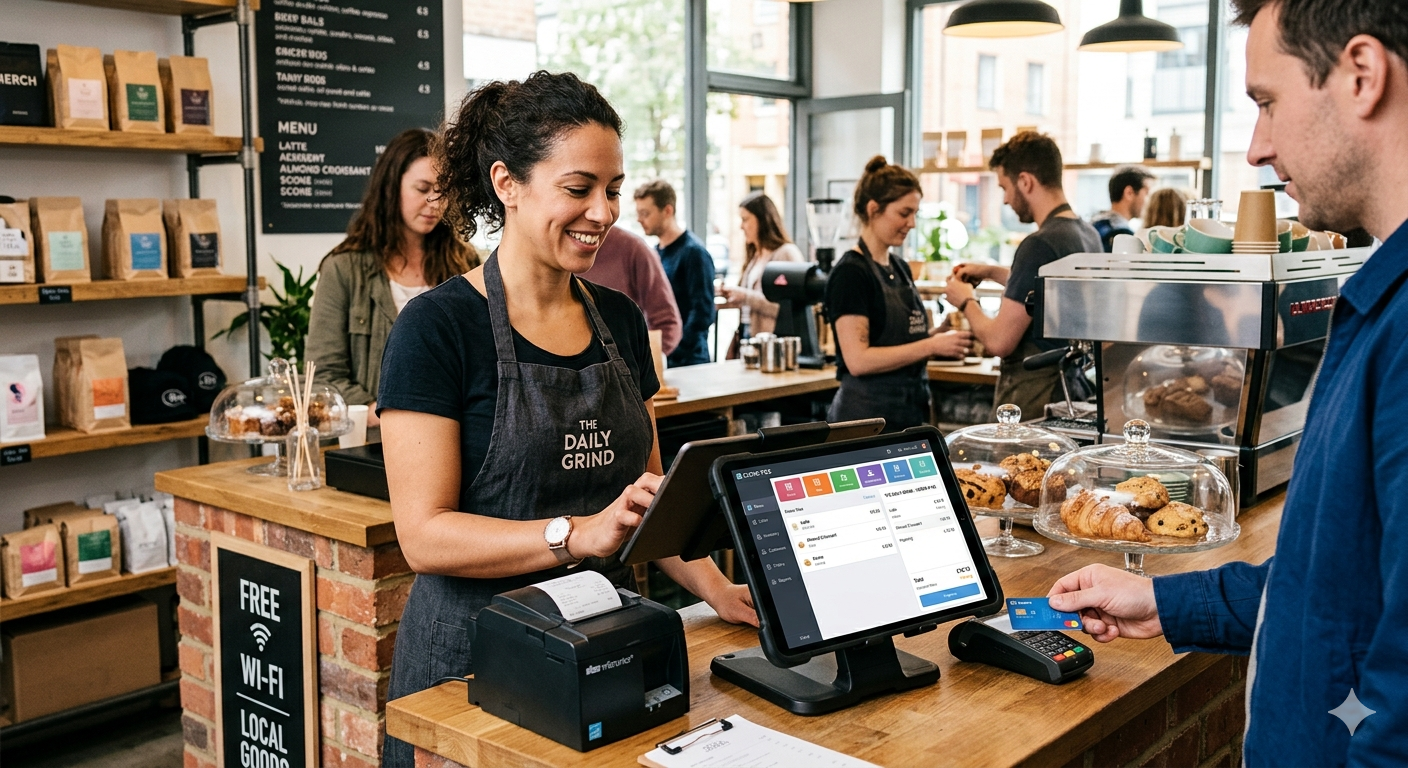
A cloud POS (Point of Sale) system is software that processes orders, payments, and inventory data in real time — storing everything on remote servers rather than a local machine.
Unlike legacy desktop POS systems, a cloud POS:
- Works from any internet-connected device — tablet, smartphone, or laptop
- Syncs data instantly across multiple branches or counters
- Updates automatically without manual software installation
- Requires no expensive local server hardware
- Allows remote access — owners can monitor sales from anywhere
A cloud-based point-of-sale system enables real-time inventory and customer data management, payment processing, and transaction processing, utilizing internet connectivity instead of local servers — providing businesses with greater efficiency, flexibility, and accessibility.
For a multi-branch restaurant in Lahore — think a biryani chain operating in DHA, Johar Town, and Gulberg simultaneously — this centralized visibility is transformational.
Why the Restaurant Call Center Lahore is Essential in 2026
1. Lahore’s Food Market Is Scaling Fast
The foodservice industry contributes 5.9% to Pakistan’s GDP and generates 3.8 million jobs nationally. Lahore, as Pakistan’s second-largest city and its food capital, accounts for a significant share of that output.
With new restaurants opening monthly across Defence, Bahria Town, and Model Town, competition is fierce. Operational efficiency — faster order processing, fewer errors, real-time stock monitoring — is now a direct competitive advantage.
2. Multi-Platform Order Management Is Non-Negotiable
Lahore restaurants in 2026 receive orders from:
- Dine-in tables
- Phone calls
- Foodpanda and Uber Eats
- Their own website or WhatsApp ordering
A cloud POS centralizes all of these into one dashboard, eliminating the chaos of switching between screens and missing orders during peak hours.
3. FBR Compliance and Digital Receipts
Pakistan’s Federal Board of Revenue (FBR) has been progressively encouraging restaurants to adopt digital invoicing and reporting. Leading cloud POS providers in Pakistan, such as Granet Pro, have built FBR compliance features directly into their systems, helping restaurant owners avoid fines and simplify tax reporting — a major pain point for Lahore’s independent restaurant operators.
4. Real-Time Inventory Control Cuts Wastage
One of the most overlooked advantages: cloud POS tracks ingredient usage in real time. If your Lahore restaurant is running low on chicken karahi ingredients on a Friday night, the system alerts you before the crisis — not after the customer complaint.
Cloud-based POS software provides real-time inventory alerts, allowing restaurant managers to maintain efficiency and reduce waste in stock management.
Key Features for Restaurant Call Center Lahore & POS
Not all cloud POS systems are equal. For the Lahore restaurant market specifically, prioritize these features:
Order & Table Management
- Tableside ordering via tablets or handheld devices
- Kitchen display system (KDS) integration — orders go directly to the kitchen screen
- Split billing and multiple payment method support (JazzCash, Easypaisa, card, cash)
Multi-Location Control
- Centralized menu management across all branches
- Consolidated sales reports and branch-by-branch comparison
- Staff access controls per location
Analytics & Reporting
- Daily, weekly, and monthly revenue dashboards
- Best-selling item tracking
- Peak-hour performance reports to optimize staffing
Integration Capabilities
- Third-party delivery platform sync (Foodpanda, Uber Eats)
- Loyalty and CRM program integration
- Accounting software compatibility
Offline Mode
- Critical for Lahore, where internet connectivity can be intermittent
- Orders should process offline and sync when the connection is restored
Real-World Example: How a Lahore Multi-Branch Restaurant Transformed Operations
Consider a mid-sized restaurant chain operating three locations in Lahore — one in DHA Phase 5, one in Gulberg III, and one in Bahria Town. Before switching to a cloud POS, the owner visited each branch physically to collect daily sales reports. Reconciling cash at month-end took a full week. Inventory theft was suspected but impossible to prove.
After deploying a cloud-based POS with centralized reporting:
- Daily sales reconciliation dropped from hours to minutes via automatic end-of-day reports
- Inventory variance reports flagged stock discrepancies at the Bahria Town branch within the first two weeks
- Peak-hour staffing was optimized after analytics revealed Friday 7–9 PM was consistently 40% busier than other shifts
- The owner now monitors all three branches live from their phone
This is the operational reality that cloud POS delivers — not just billing software, but a business intelligence platform built into daily restaurant operations.
Restaurant Call Center Pakistan – The Missing Piece
A powerful cloud POS handles what happens inside the restaurant. But what about the customer calling to place an order?
In Lahore’s busy restaurant scene, phone orders remain a major revenue channel — especially for family restaurants, BBQ spots, and traditional Pakistani cuisine establishments where customers prefer calling over apps.
The problem: during peak hours, phones go unanswered. Staff is occupied, orders are missed, and that missed call is a lost sale.
This is where a Restaurant call center becomes a revenue tool, not just a customer service cost.
What Is a Restaurant Call Center Lahore Solution
A restaurant call center is a centralized phone-handling service — either in-house or outsourced — that takes customer orders by phone, handles reservation inquiries, and routes orders directly into the POS system.
A call center will answer every single phone call that comes in — so you will not miss an order. And while there is a cost in outsourcing, that cost is quickly recovered when you’re collecting revenue from orders that you previously couldn’t answer.
Why Pakistani Restaurants Need This in 2026
Pakistan’s restaurant delivery market is booming, but phone-based ordering remains culturally strong — particularly among older demographics and customers placing large family orders. Many customers still prefer speaking to a person over navigating an app.
Outsourcing customer service to a call center is a cost-effective solution for restaurants, providing 24/7 support, multilingual handling, and improved customer experience — all without putting pressure on in-restaurant staff.
For a restaurant chain operating across multiple Lahore locations, a centralized call center means:
- One unified phone number — all branches covered
- Orders automatically routed to the nearest or most available branch
- Upselling prompts built into the call script (e.g., “Would you like to add our garlic naan for just Rs. 80?”)
- Customer history pulled up automatically on repeat callers
POS + Restaurant Call Center Lahore Integration Advantage
When your call center is integrated with your cloud POS, the workflow becomes seamless:
- Customer calls → Agent answers within seconds
- Customer’s order history and address auto-populate
- The agent places the order directly into the POS
- Order prints automatically in the kitchen
- Delivery is dispatched without any manual re-entry
VoIP-based restaurant call center systems integrate directly with major POS platforms, placing orders straight into the kitchen and eliminating double-entry errors.
This end-to-end automation is what separates high-volume, high-efficiency Lahore restaurants from those still scribbling orders on notepad paper.
Top Cloud POS Providers Serving Lahore Restaurants (2026)
Several platforms currently serve the Lahore restaurant market:
- Granet Pro — Pakistan-focused cloud POS trusted by 500+ restaurants, with pricing starting at PKR 2,500/month, FBR compliance, and Lahore-based support available 7 days a week
- Foodnerd POS — A cloud-based solution with real-time inventory alerts, AI-supported management, and a mobile app available on iOS, Android, and Windows
- CISePOS — Serves restaurants across Lahore, Karachi, and Islamabad with inventory management, sales tracking, and a comprehensive business management suite
- TMBill — Supports both online and offline operation — ideal for restaurants in areas with unstable internet connectivity — with QR code ordering, CRM, and aggregator integrations
When evaluating a provider, always request a free demo, ask about offline capability, and confirm FBR integration is included.
Conclusion: The 2026 Standard for Lahore Restaurants
Running a restaurant in Lahore in 2026 without a cloud POS is the equivalent of running a business without WhatsApp — technically possible, but practically a competitive disadvantage at every level.
The combination of a cloud-based restaurants POS system and an integrated restaurant call center gives Lahore restaurant owners what they need most:
- Full operational visibility across locations
- Zero missed orders during peak hours
- Accurate, real-time data to make faster business decisions
- Compliance-ready reporting for FBR
- A customer experience that keeps people coming back
Whether you run a single café in Gulberg or a multi-branch karahi chain across the city, the technology investment pays for itself quickly — in recovered missed orders, reduced theft, and smarter staffing.
The Lahore restaurant market is growing. The question is whether your systems are growing with it.
Frequently Asked Questions (FAQ)
Q1: What is the best cloud POS system for restaurants in Lahore?
The best cloud POS for a Lahore restaurant depends on your size and needs. For small to mid-sized restaurants, Foodnerd POS and Howmuch POS offer affordable, user-friendly options. For multi-branch chains needing FBR compliance and advanced analytics, Granet Pro and CISePOS are strong choices. Always request a free demo before committing.
Q2: How much does a cloud POS system cost in Pakistan?
Cloud POS pricing in Pakistan typically starts around PKR 2,500 to PKR 5,500 per month, depending on the number of modules and locations. This is significantly more affordable than traditional POS setups, which require upfront hardware investment of PKR 50,000 or more.
Q3: Can a restaurant call center integrate with my POS system in Lahore?
Yes. Modern VoIP-based call center solutions integrate directly with cloud POS platforms, placing phone orders straight into the kitchen without manual re-entry. This eliminates order errors and speeds up fulfillment during busy hours.
Q4: Does a cloud POS work without the internet in Pakistan?
Leading cloud POS providers serving Pakistan — including TMBill and Granet Pro — offer offline mode, which processes orders locally and syncs data automatically once the connection is restored. This is an essential feature for areas with unstable connectivity.
Q5: Why does a restaurant in Lahore need a call center?
A restaurant call center ensures no phone order is missed during peak hours. For Lahore restaurants receiving high volumes of takeaway and delivery calls, a centralized call center — whether in-house or outsourced — handles orders professionally, reduces staff pressure, and can increase revenue through consistent upselling.
