Most restaurants that run their own delivery start the same way: a WhatsApp group for riders, a notebook at the counter, and a lot of phone calls. It works while you have three riders and twenty orders a night. Then the orders double, and suddenly nobody knows which rider has which order, how much cash is still out, or why the same customer has called four times.
A smart rider app replaces that guesswork with a system. This guide explains what makes a rider app “smart”, the concrete benefits it brings to restaurant owners, delivery riders, and customers, what it will not fix on its own, and how to choose one that fits a restaurant delivery operation in Pakistan.
What Is a Smart Rider App?
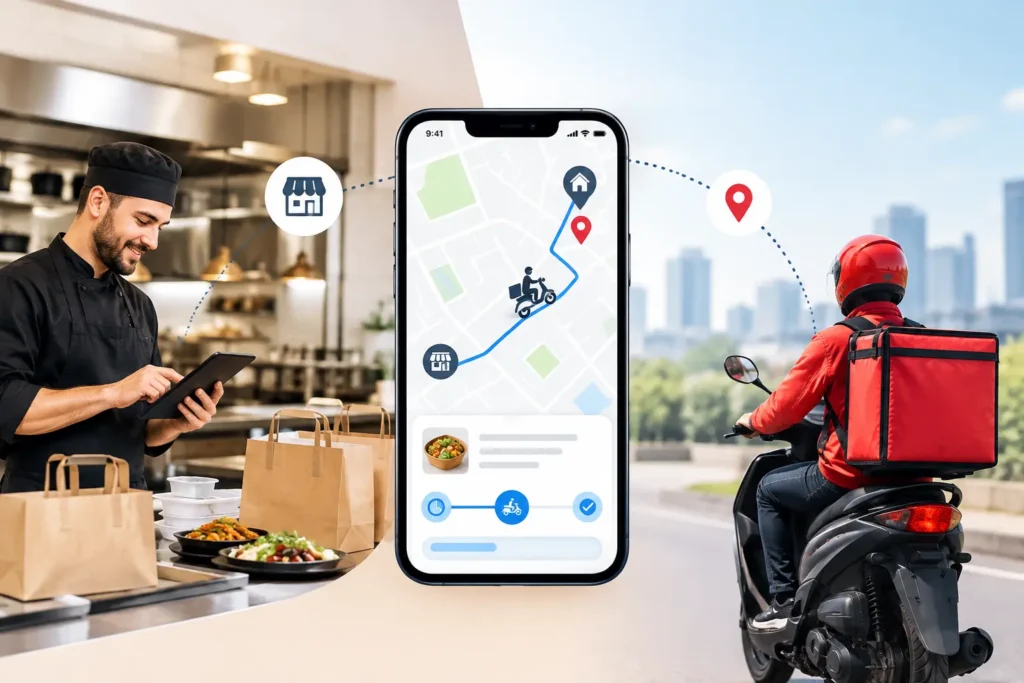
A smart rider app is a delivery app for restaurant riders that automates the steps between “order ready” and “order delivered”. It sends each order to a rider with the address and route attached, tracks the rider’s live location, updates the order status automatically, records cash collected, and gives the restaurant reports on every delivery.
The word “smart” is about what the app does without being asked. A basic rider app is little more than a digital order slip. A smart one connects to your POS and kitchen, so it knows when food is ready, which riders are free, and when an order is running late. If you are new to the idea, our guide to what a rider app is and how it works covers the basics.
What Makes a Rider App “Smart”?
These are the features that turn a rider app from a list of addresses into a delivery system:
- Ready-to-assign alerts: when the kitchen marks an order ready, the rider app shows it straight away, so it can be assigned to an available rider without anyone calling out across the counter.
- Rider status: riders mark themselves online or offline, so orders only go to people who are actually working.
- Route guidance: the delivery address with a suggested route, so riders spend less time asking customers for directions.
- Real-time rider tracking: one map showing where every active rider is and which order each one is carrying.
- Live ETAs: estimated delivery times that update as the rider moves, for the restaurant and the customer.
- Automatic status updates: picked up, on the way, and delivered, recorded with a tap instead of a phone call.
- Delivery data and reports: delivery times, orders per rider, and late deliveries in one place.
- POS integration: the rider sees the exact order the kitchen cooked, with the payment type, so nothing is retyped.
For a complete feature checklist, see our post on the must-have features of a restaurant delivery rider app.
Benefits of a Smart Rider App for Restaurant Owners and Managers
1. You Always Know Where Every Order Is
The biggest change is visibility. Instead of calling riders to ask where they are, the manager opens one screen and sees every active delivery, its rider, and its expected arrival time. When a customer calls, the answer takes seconds.
2. Faster Dispatch on Busy Nights
On a Friday night, the delay is often not the kitchen but the gap between “food is ready” and “rider has left”. When the rider app is connected to your kitchen display system, the order shows as ready the moment the kitchen finishes it, so it can be assigned straight away instead of waiting at the pass.
3. Fewer Wrong or Missing Deliveries
When the rider reads the order from the same record the kitchen cooked from, items, notes, and addresses are not copied by hand. That removes a common source of wrong deliveries and missing drinks.
4. Cleaner Cash Handling
Cash on delivery is still common in Pakistan. When every delivered order is recorded in the system with its payment type and amount, the end-of-shift cash count can be checked against a list instead of a rider’s memory. That makes shortfalls easier to spot and less awkward to raise.
5. Data to Plan Riders and Delivery Areas
Delivery reports show your peak hours, slowest areas, and which riders handle the most orders. That helps you decide how many riders to schedule, where to set delivery zones, and when a delivery fee or minimum order makes sense.
6. Less Dependence on Marketplace Commission
Running your own riders with a proper app makes direct delivery practical, so more orders can come through your own channels instead of a marketplace. Commission matters: in 2020, Karachi restaurants boycotted Foodpanda after it sought to raise commission from 18 percent to between 25 and 35 percent, as reported by Arab News. Rates vary by agreement and have changed since, but the incentive to own your delivery is the same. We weigh the trade-offs in 3rd-party delivery apps vs your own rider app.
Benefits of a Smart Rider App for Delivery Riders
- Clear orders, no guesswork: the address, phone number, items, and payment type are on the phone before the rider leaves.
- Easier navigation: route guidance means fewer wrong turns and fewer calls to the customer asking for directions.
- Fewer calls from the restaurant: status updates replace “where are you?” calls while riding.
- A fair record of work: order history shows every completed delivery, which helps settle disputes about cash or late orders.
- Simple shift control: riders mark themselves online or offline, so they are not assigned orders during a break.
Rider safety deserves a mention here. The World Health Organization reports that motorcyclists are among the vulnerable road users who account for more than half of road traffic deaths, and that drivers using mobile phones are about four times more likely to crash (WHO). A good rider app should need as few taps as possible, and riders should update status when they stop, not while riding.
Benefits of a Smart Rider App for Customers
- Live tracking: customers can see where their order is instead of guessing.
- Honest delivery times: ETAs update during the trip, so a delay does not come as a surprise.
- Fewer mistakes: the rider delivers exactly what was ordered, with the right change ready on cash orders.
- Fewer phone calls: customers do not need to call the restaurant to ask where their food is.
What a Smart Rider App Will Not Fix
A rider app makes delivery visible and organised. It does not solve every delivery problem:
- A slow kitchen: if food takes 40 minutes to prepare, faster dispatch only saves the last few minutes. Kitchen timing still needs its own fix.
- Too few riders: the app shows you that riders are overloaded, but you still need enough of them at peak hours.
- Poor addresses: vague addresses still cause delays. Asking customers for a landmark or a shared location helps.
- Weak mobile signal: tracking depends on the rider’s phone and connection, so occasional gaps are normal.
How to Choose a Smart Rider App
- Does it connect to your POS and kitchen screen, or will staff retype orders?
- Can managers see every rider on one live map?
- Does it record payment type and cash collected for each delivery?
- Is it simple enough for riders to use with one hand at a stop?
- Does it include delivery reports you will actually read?
- Is there onboarding for riders and support during your busiest hours?
- Are there per-order fees or commission, or a fixed cost?
How CherryBerry RMS’s Rider App Works
The CherryBerry RMS restaurant rider app runs inside one platform together with its cloud based POS system, online ordering and order management software, and kitchen management. According to the service page, an order flagged as ready by the kitchen appears in the rider app right away, and the order taker hands it to a free rider. The rider receives the route and address with the order attached, the restaurant and customer can follow the rider’s live location with an updating ETA, and the order is closed when the rider marks it delivered.
The service page also lists rider online and offline status, order history, delivery planning, delivery data and reports, a fleet dashboard for multiple riders, a commission-free model, rider onboarding and training, and 24/7 support. Orders placed through WhatsApp AI ordering follow the same path to the kitchen and then to a rider.
Frequently Asked Questions
What is a smart rider app?
A smart rider app is a delivery app for restaurant riders that connects to the restaurant’s POS and kitchen. It assigns ready orders to riders, provides the route, tracks riders live, updates order status automatically, records cash collected, and reports on every delivery.
What are the main benefits of a smart rider app for restaurants?
Restaurants get live visibility of every delivery, faster dispatch, fewer wrong orders, cleaner cash handling, delivery data for planning riders and zones, and less reliance on marketplace commission.
How is a smart rider app different from a basic rider app?
A basic rider app shows riders a list of orders and addresses. A smart rider app also knows when food is ready, which riders are available, where each rider is, and when an order is running late, because it is connected to the POS and kitchen.
Do small restaurants need a smart rider app?
If you run your own riders and deliver more than a handful of orders a night, it usually helps. Even with two or three riders, live tracking and cash records save calls and reduce disputes.
Can a smart rider app track cash on delivery?
A good one records the payment type and amount for every order, so cash collected by each rider can be matched against delivered orders at the end of the shift. Check this feature before you choose a provider.
Does a rider app work with WhatsApp orders?
It can if both are part of the same system. In CherryBerry RMS, WhatsApp orders go to the kitchen like any other order and are then assigned to a rider through the rider app.
Conclusion
A smart rider app does not make your food better or your riders faster on the road. What it does is remove the confusion around them: who has which order, where they are, what was collected, and why a delivery was late. For restaurants that run their own delivery, that clarity is usually the difference between growing delivery orders and drowning in them.